October 24, 2025
By Roan Hollander
Kathleen Quaintance is a PhD candidate in the Department of History of Art. As a historian of modern craft and technology, she studies transitions between abstraction and embodiment, and enjoys bridging the gap between the hand and the mind in her work and teaching. Her research asks questions about the role of craft and its unique relationship to time in industrialized twentieth-century America. Quaintance is the craftsperson in residence at the Yale farm and the founder and organizer of the Yale textile working group. Roan Hollander is a Yale College senior majoring in Environmental Studies.

It’s the third year of Kathleen Quaintance’s Environmental Humanities project, “From Sowing to Sewing: Pigments in Context,” and like the indigo she is sowing, her project continues to grow. Over the past few years, Quaintance has explored how the question of indigo dye is made and why people and communities still choose to undertake the labor-intensive method of harvest and dye extraction today when a synthetic alternative exists. Each year the indigo project has expanded to engage more people across the Yale campus, from chemistry to history, art, environmental studies, and sociology.
.jpeg)
The Yale Farm, located at 345 Edwards St.
The Process: From Plant to Pigment
Creating indigo from seed to dye is a lengthy, multi-step process that Quaintance conducts mainly at the Yale Farm. The long journey begins in the spring when students plant indigo seeds, in this case, Persicaria Tinctoria, or Japanese indigo, is first grown for a few weeks in the farm’s greenhouse. Japanese indigo contains indigotin, the necessary compound needed to make indigo dye. After the weather warms, Quaintance works with students to move the seedlings outside to a humid and sunny patch of the farm for a productive summer of growth. Then in the fall, participants in the farm’s volunteer workdays and students enrolled in classes that visit the farm harvest the indigo, guided by Quaintance. The indigo grows back after it is clipped, a feature that enables multiple harvests over the course of the fall.

Japanese indigo before harvest

Freshly cut indigo
After harvest, the indigo stalks are placed into a mesh bag, covered in wire, and submerged in a large basin filled with water. The bag of indigo, which Quaintance likens to a large teabag, is weighted underwater with rocks. The indigo ‘teabag’ remains underwater in the basin for several days, fermenting until the water becomes a beautiful mermaid blue. After a process of aeration, adding calcium hydroxide, and waiting for the pigment to settle, the “mermaid water” turns into a recognizable indigo color. At the bottom of the basin is indigo dye in sludge-form, which Quaintance extracts by siphoning off the water that has settled out on top.
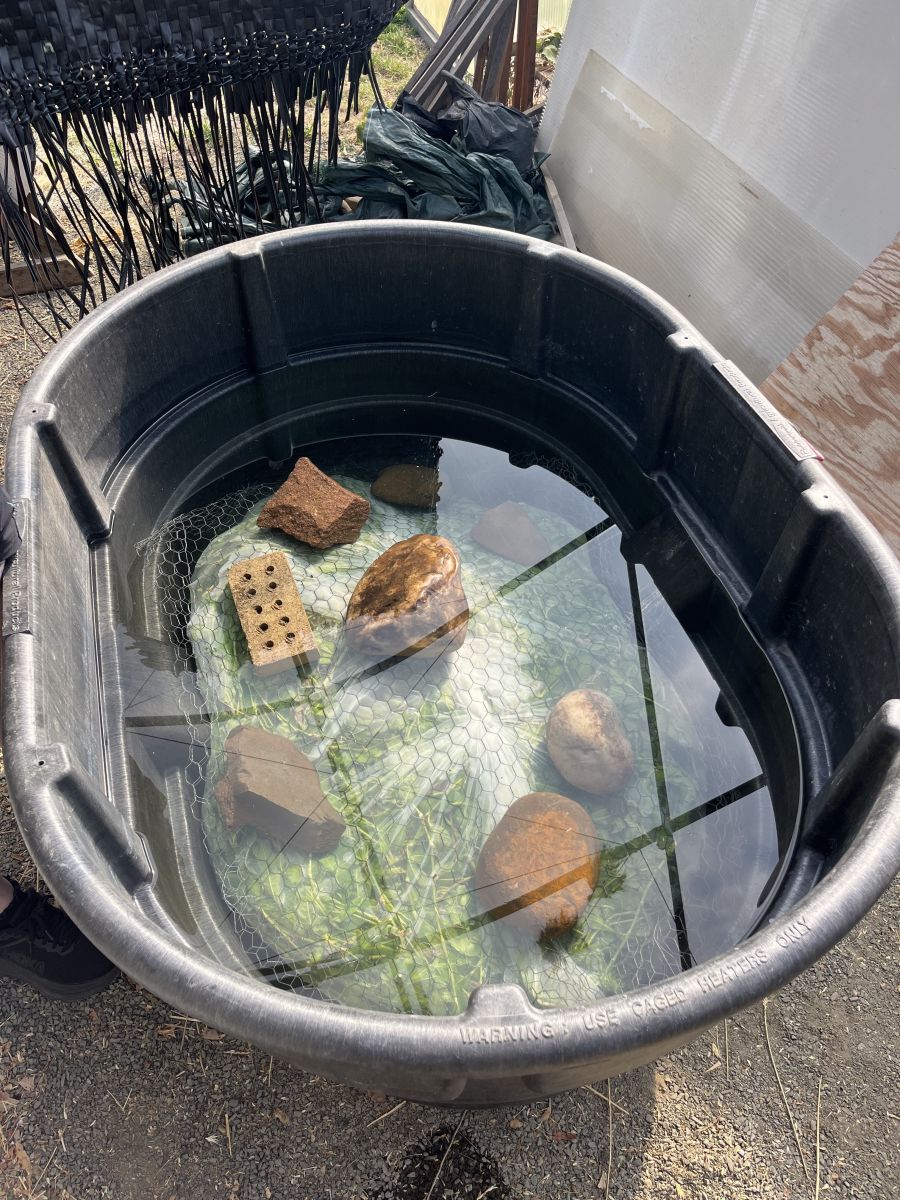
Indigo teabag

Mermaid water!
Indigo’s Complicated Role in History
Quaintance situates her project and her exploration of indigo’s anthropology in the context of indigo’s major influence on world history – from being produced for generations in many parts of Asia and West Africa to being coveted by colonists and fueling empire-building and slavery. Indigo has been extensively studied in the field of “economic botany,” which examines the material relationship between humans and plants. Indigo farming fueled one of the first major rebellions against the British Empire in India, the Blue Mutiny, which began in 1859. Farmers in Bengal, on the verge of famine after being forced to solely grow indigo instead of food crops that could sustain them, rebelled against British rule. Indigo farming soon collapsed in the region.

Indigo dye ready for use
Indigo farming and dye production also took place in the southern United States and were central to the southern economy. Plantation owners exploited the knowledge that enslaved people from West Africa held of indigo production by forcing them to grow and produce indigo. This explains the roots of South Carolina’s indigo blue flag, which symbolizes just how important indigo was to the southern state’s plantation economy. Indigo blue is not ubiquitous around the world – Yale’s own trademark color blue is very similar to indigo blue, inspired by the colors used by Oxford.
Synthetic indigo was invented in the 19th century. The synthetic due largely eliminated the extensive indigo plantations. Today, natural indigo dye production from the plant generally occurs only in small-scale operations in various parts of the world, such as here, at the Yale Farm.
Learning From the Indigo Dye Process
One of Quaintance’s favorite things about the indigo dye-making process is how it brings non-academic, hands-on pursuits to people in academia. Since beginning as an Environmental Humanities-funded grant project in and a partnership with the Yale Farm, Quaintance’s project has grown to become a part of multiple classes at Yale. Mark Bomford’s class, “Approaches to Sustainable Food and Agriculture,” harvested the first batch of indigo this fall on September 12th. The following Wednesday, students Edward Cooke’s “Embodied Artisanal Knowledge” class dyed textiles at the Farm using indigo and a variety of other natural pigments, including cosmos flowers and cochineal. Last fall, the “Mexican Codices: Art and Knowledge” class also visited the farm, and staff from the Library of Congress, which uses blue ink from indigo, visited to learn about the project.
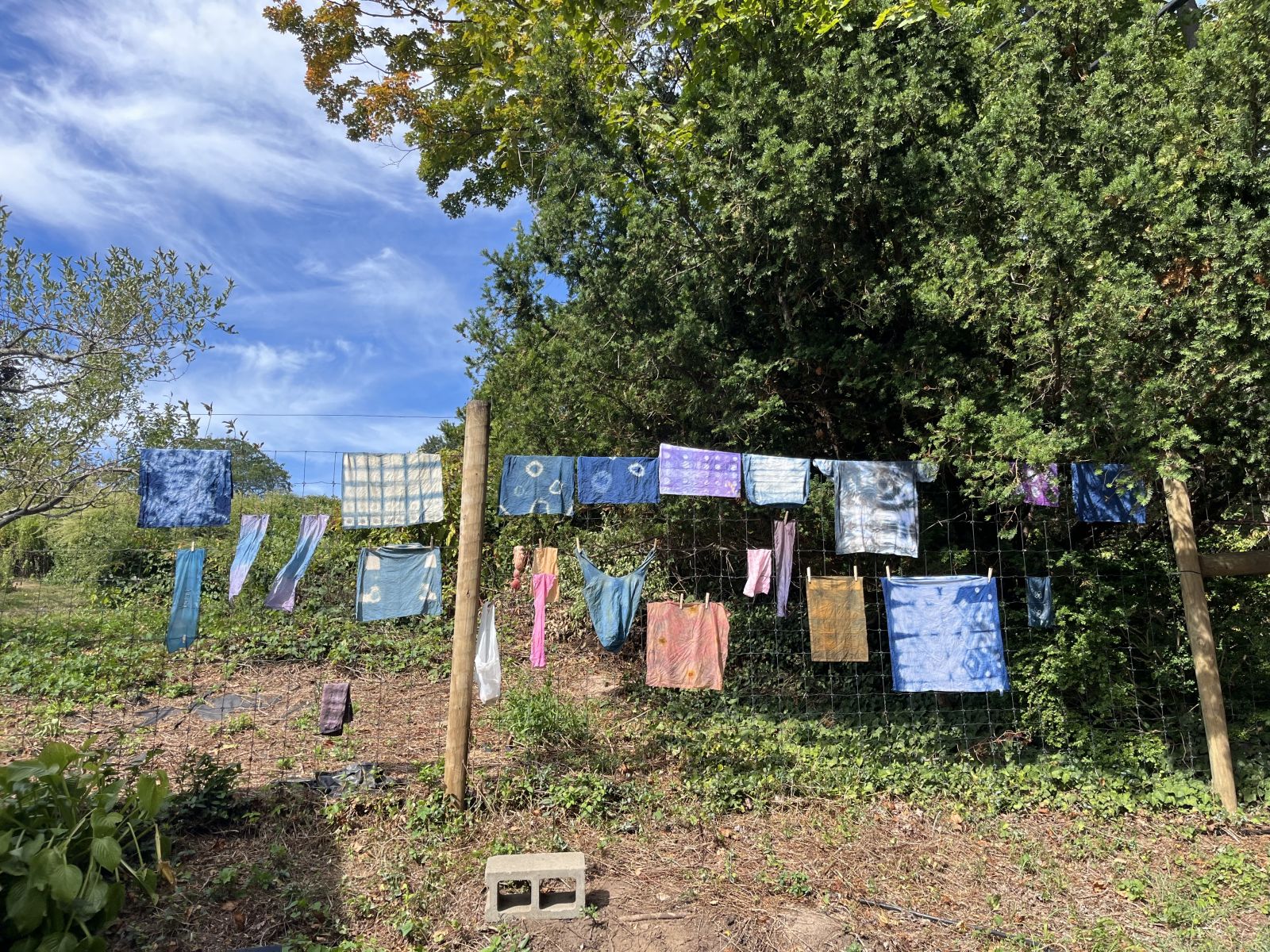
Textiles dyed with indigo and various other natural dyes drying at the Farm

Cochineal dye, prepared from insects
To Quaintance, this small-scale indigo production process allows for the transfer of tacit knowledge, something that has dwindled in our largely technology-driven and increasingly automized world. Kathleen sees it as an important exercise in finding meaning and intentionality in the face of AI’s rise. When we have the option for our goods and our writing to be produced by someone or something else, she argues, we must reconnect with the meaning behind producing these things ourselves. What are our intentions behind producing something purely from our thoughts and experiences? What does it mean deliberately invest energy, time and labor into production? These are all questions that Quaintance seeks to answer with her project. Indigo dye production and indigo dyeing are exercises in meaning-making and of rediscovering what it means to act with intention.

Paintings by Kathleen Quaintance made using indigo dye
As she is in the fourth year of her PhD, Quaintance hopes to find partners who will continue the project and continue to share this dye-making knowledge across the disciplines. Quaintance also facilitates tacit and interdisciplinary knowledge transfer through her other campus projects. She founded and organizes the Textile Working Group, an open space for textile work of any kind that meets monthly at the School of Architecture. The group is welcome to all and comprised of graduate students, undergraduates, and Yale professors and employees.
The Yale Environmental Humanities Program’s small grants initiative supports innovative public humanities projects undertaken by students, faculty, and staff. Read more about recent projects on the Yale Environmental Humanities website.
Type:
Public Humanities Grant