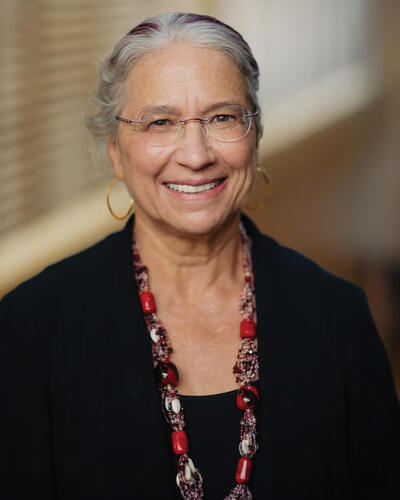
Dr. Amity Doolittle is a Senior Lecturer II and Research Scientist at Yale School of the Environment. Her research focuses on property rights and how control over and access to natural resources is defined, negotiated, and contested by different stakeholders. She is also the Principal Investigator at YSE’s Success Lab, a new research program that explores the conditions under which place-based environmental NGOs (ENGOs) can successfully affect social and environmental change. In this Q&A, she discusses the Success Lab’s mission and methodology, as well as its partnerships with case study organizations.
YEH: What motivated you to create the Success Lab?
Amity Doolittle: The Success Lab is a genuine labor of love — the product of 35 years researching conservation and development challenges around the world. It grew out of a question that conventional impact reporting rarely answers well: what does success really look like for a place-based environmental organization? It’s been shaped by engagement with thousands of brilliant, curious students at the Yale School of the Environment (YSE) and Yale Environmental Leadership and Training Initiative (ELTI), and by deep conversations with scores of environmental practitioners working around the world. I found in my research and teaching that invaluable insights from the social sciences and humanities are not easily translated into usable knowledge for our graduate students who strive to be environmental managers. Through the Success Lab, our approach to bridging the theory-to-practice divide is twofold: translating academic knowledge into tools and frameworks that are accessible to a wider audience and bringing together rigorous academic research with the hard-won knowledge of environmental managers. Our goal is to co-create environmental solutions that are just, equitable, durable, and, critically, grounded in place and responsive to local needs.
YEH: What is the importance of specifically focusing on place-based ENGOs?
Amity Doolittle: Place-based ENGOs are community-rooted institutions that focus on the environmental challenges and opportunities of a specific geographic area — a watershed, a city, a working landscape. They draw on local knowledge, long-term relationships, and cross-sector collaboration to develop strategies tailored to the social and ecological realities of the landscapes and communities they serve. Unlike organizations that operate at national or global scales, place-based ENGOs often derive their legitimacy and effectiveness from sustained presence, deep community engagement, and responsiveness to local priorities. It is these relationships that we are most interested in. Moreover, we are interested in the potentially outsized role of local ENGOs in the wider question of environmental governance. As we see a hollowing out of nation-state power and uninspiring results from market mechanisms, ENGOs, as representatives of civil society and community action, are positioned to shape environmental governance in ways that can ripple far beyond the landscapes where they work.
YEH: Is there a place for humanities perspectives in the Lab’s methodology?
Amity Doolittle: From my standpoint, the humanities perspective is central to our approach. In the broadest sense, the humanities are academic fields that study human culture, expression, ideas and history. I am trained in political ecology, a subfield of environmental anthropology. My research has always focused on placing human relationships to nature in conversation with both history and the broader political economy. It is only through understanding history and the wider structural forces associated with the political economy can we fully understand our present-day nature-society relationships. Ultimately, this is how we can move beyond ahistorical and apolitical solutions to environmental problems.
YEH: What are some of the ways that partner organizations can benefit and strengthen their work through collaborating with the Lab?
Amity Doolittle: Working with our two pilot case studies— Urban Resources Initiative (URI) and Blackfoot Challenge (BC)— we are developing a set of tools and resources that we believe will close the gap between theory and practice. As we refine these tools and resources we are sharing them with other ENGOs that may benefit from our work, ensuring our work moves between the boundaries of academia and practice, instead of being confined within disciplinary or institutional silos. Concurrently, we are developing a “Community of Practice” bringing together academics and practitioners to discuss the challenges we are all facing in our work toward environmental sustainability.
YEH: How will the Lab’s research be integrated into academic programming? And how can students learn more or get involved?
Amity Doolittle: The work of the lab not only draws on my teaching, it contributes to it. One of the courses I teach at the YSE and through the ELTI certificate course on Tropical Forest Landscapes: Conservation, Restoration, and Sustainable Use is called “Social Science Foundations for Environmental Managers.” In this course, I explore different ways to frame and talk about the contributions of a wide range of fields in the social sciences and humanities. There are twin challenges in this course: 1) to explain (and ultimately justify) the contributions of what are all-too-often called the “soft sciences” to students who may be more drawn to the fields of economics and ecology, and 2) making sense of social science contributions that are often theory-laden, opaque and abstract to students who seek professional careers outside academia. Both challenges speak to core goals in the Success Lab: closing the theory-to-practice divide through better translation of science and ensuring that science is usable. Everything I am learning through case study research informs my teaching. By enrolling in this course at YSE you can be part of this ongoing conversation. Additionally, each year we hire several student research interns to join the lab. Keep an eye out for our job announcements.
YEH: Anything else you’d like to share?
Amity Doolittle: An important part of the Success Lab is the word “success.” We are questioning the traditional metrics that governments and funders use to measure impact–and ultimately to determine success. How do we know when an environmental non-governmental organization (ENGO) is succeeding? Is success defined by the effectiveness and efficiency of delivering programmatic outputs? Or is it related to the legitimacy and value of an organization to improve environmental and social conditions within the networks in which it works ? The instinct, especially among funders and evaluators, is to focus on the first definition of success— to count things directly related to programmatic outputs such as hectares restored, policies adopted, carbon tonnes avoided. These metrics are not insignificant, but they can be misleading. Research on environmental governance and urban transformation increasingly suggests that the most consequential forms of impact are precisely those hardest to quantify, such as building a scientifically informed and democratically engaged citizenry that can advocate for the environmental futures they wish to see. Our goal is to change the conversation around “success” by learning to tell the stories of ENGO impact in new and exciting ways. To learn more about the lab— and to read our newest blog, “Beyond the Scorecard,” which digs deeper into the question of how to measure impact— visit successlab.yale.edu.